Research on AI methods applied to Earth system and physics problems
Artificial intelligence and machine learning provide powerful tools for analyzing high-dimensional, nonlinear systems that are central to both physics and Earth system science. My work explores how modern AI methods can enhance our understanding and prediction of complex dynamical systems.
Key topics
Generative models for physical systems
Deep learning
Applying score-based generative models and other deep generative methods to learn the probability distributions of physical and climate systems, enabling sampling, denoising, and anomaly detection.
Data-driven tipping point detection
Early warning
Using machine learning techniques to detect and predict critical transitions in Earth system components from observational and reanalysis data.
Physics-informed machine learning
Hybrid models
Developing hybrid approaches that combine physical constraints and domain knowledge with neural networks to improve the interpretability and generalization of AI-based models for climate and physics.
Accurate assessment of anthropogenic climate change relies on historical instrumental data, yet observations from the early 20th century are sparse, fragmented, and uncertain. Conventional reconstructions rely on disparate statistical interpolation, which excessively smooths local features and creates unphysical artifacts, leading to systematic underestimation of intrinsic variability and extremes. While recent machine learning approaches have improved reconstruction accuracy, they remain confined to purely spatial inpainting of coarse-resolution fields. Here, we present a unified, probabilistic generative deep learning framework that overcomes these limitations and reveals previously unresolved historical climate variability back to 1850. Leveraging a learned generative prior of Earth system dynamics, our model performs probabilistic inference to recover spatiotemporally consistent historical temperature and precipitation fields from sparse observations. Our approach preserves the higher-order statistics of climate dynamics, transforming reconstruction into a robust uncertainty-aware assessment. We demonstrate that our reconstruction overcomes pronounced biases in widely used historical reference products, including those underlying IPCC assessments, especially regarding extreme weather events. Notably, we uncover higher early 20th-century global warming levels compared to existing reconstructions, primarily driven by more pronounced polar warming, with mean Arctic warming trends exceeding established benchmarks by 0.15-0.29 °C per decade for 1900-1980. Conversely, for the modern era, our reconstruction indicates that the broad Arctic warming trend is likely overestimated in recent assessments, yet explicitly resolves previously unrecognized intense, localized hotspots in the Barents Sea and Northeastern Greenland. Furthermore, based on our seamless global reconstruction that recovers precipitation variability across the oceans and under-monitored regions, we uncover an intensification of the global hydrological cycle. Our results provide a globally complete, uncertainty-aware, spatiotemporally consistent temperature and precipitation reconstruction back to 1850, enabling more precise assessments of historical anthropogenic climate change, especially with regard to historical changes in extreme weather events, even in the polar regions where observations are sparse.
@article{qian2026generative,title={Generative deep learning improves reconstruction of global historical climate records},author={Qian, Zhen and Liu, Teng and Bathiany, Sebastian and Yang, Shangshango and Hess, Philipp and Bochow, Nils and Burmester, Christian and Gelbrecht, Maximilian and Groenke, Brian and Boers, Niklas},journal={arXiv preprint arXiv:2602.16515},doi={10.48550/arXiv.2602.16515},year={2026}}
As enduring carbon sinks, forest ecosystems are vital to the terrestrial carbon cycle and help moderate global warming. However, the long-term dynamics of aboveground carbon (AGC) in forests and their sink-source transitions remain highly uncertain, owing to changing disturbance regimes and inconsistencies in observations, data processing, and analysis methods. Here, we derive reliable, harmonized AGC stocks and fluxes in global forests from 1988 to 2021 at high spatial resolution by integrating multi-source satellite observations with probabilistic deep learning models. Our approach simultaneously estimates AGC and associated uncertainties, showing high reliability across space and time. We find that, although global forests remained an AGC sink of 6.2 PgC over 30 years, moist tropical forests shifted to a substantial AGC source between 2001 and 2010 and, together with boreal forests, transitioned toward a source in the 2011-2021 period. Temperate, dry tropical and subtropical forests generally exhibited increasing AGC stocks, although Europe and Australia became sources after 2011. Regionally, pronounced sink-to-source transitions occurred in tropical forests over the past three decades. The interannual relationship between global atmospheric CO2 growth rates and tropical AGC flux variability became increasingly negative, reaching Pearson’s r = -0.63 (p < 0.05) in the most recent decade. In the Brazilian Amazon, the contribution of deforested regions to AGC losses declined from 60% in 1989-2000 to 13% in 2011-2021, while the share from untouched areas increased from 33% to 76%. Our findings suggest a growing role of tropical forest AGC in modulating variability in the terrestrial carbon cycle, with anthropogenic climate change potentially contributing increasingly to AGC changes, particularly in previously untouched areas.
@article{qian2025decadal,title={Decadal sink-source shifts of forest aboveground carbon since 1988},author={Qian, Zhen and Bathiany, Sebastian and Liu, Teng and Blaschke, Lana L and Teo, Hoong Chen and Boers, Niklas},doi={https://doi.org/10.48550/arXiv.2506.11879},journal={arXiv preprint arXiv:2506.11879},year={2025}}
Herein, percolation phase transitions on a two-dimensional lattice were studied using machine learning techniques. Results reveal that different phase transitions belonging to the same universality class can be identified using the same neural networks (NNs), whereas phase transitions of different universality classes require different NNs. Based on this finding, we proposed the universality class of machine learning for critical phenomena. Furthermore, we investigated and discussed the NNs of different universality classes. Our research contributes to machine learning by relating the NNs with the universality class.
@article{hu2023universality,title={Universality class of machine learning for critical phenomena},author={Hu, Gaoke and Sun, Yu and Liu, Teng and Zhang, Yongwen and Liu, Maoxin and Fan, Jingfang and Chen, Wei and Chen, Xiaosong},journal={Science China Physics, Mechanics \& Astronomy},volume={66},number={12},pages={120511},doi={10.1007/s11433-023-2221-8},month=nov,dimensions={true},year={2023},publisher={Springer},}
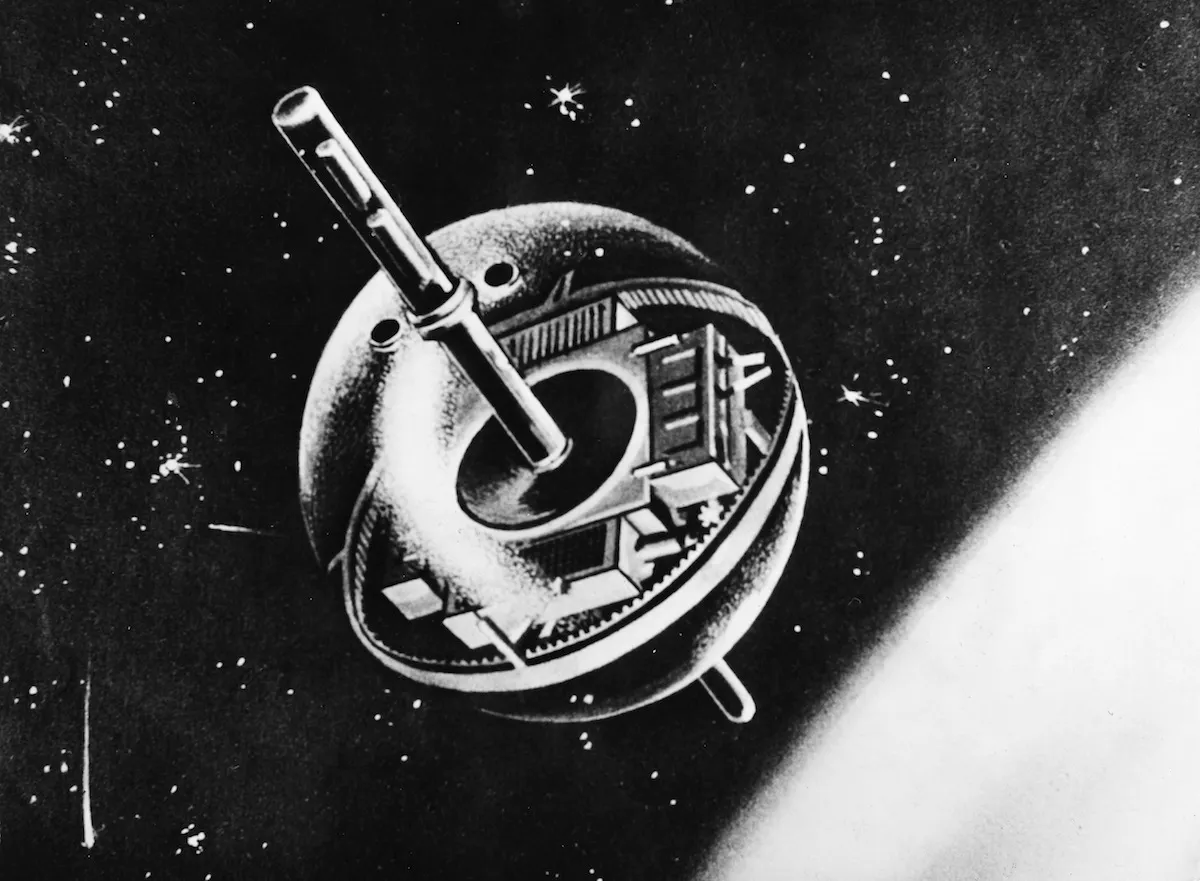 arXiv preprint arXiv:2602.16515, 2026
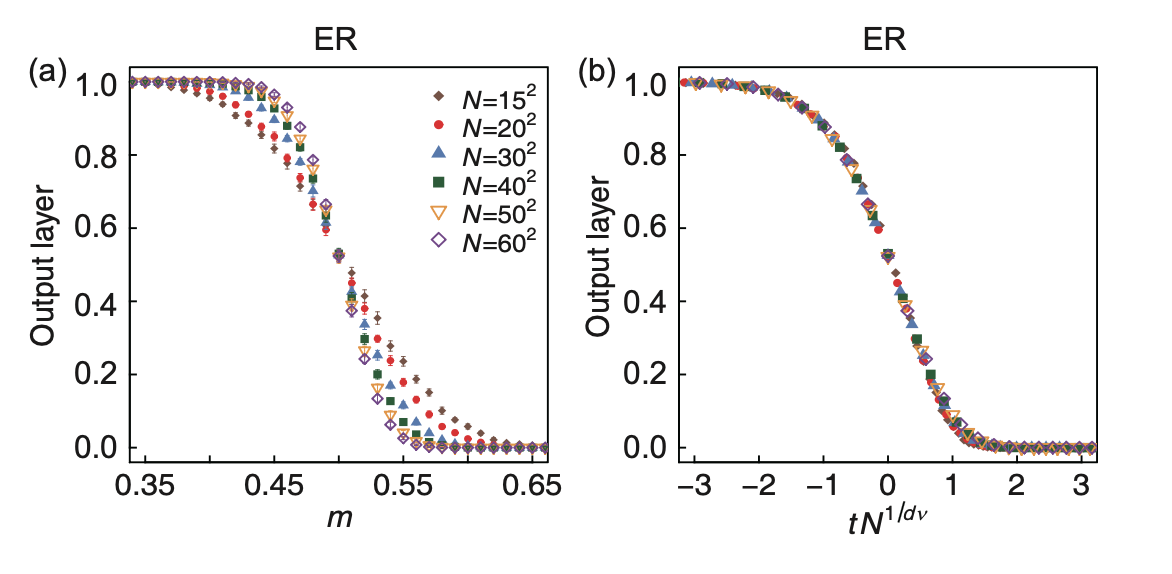 Science China Physics, Mechanics & Astronomy, Nov 2023